Amidst the amalgamation process of photography within realm of visual art, especially in context of Indonesia, which its echoes felt in the last five years, one actually could feel its tendency to erect more boundaries related to definition or character of each medium. Of course, the matters of alignment and crossing has become an almost certain thing in such practice of contemporary art, therefore the relation between them becomes more complex and acceptable as it is.
Works of Akiq AW and Agung Nugroho Widhi in some certain ways reflect their ability to do more than just mirroring reality. Each of them took interest in investigating perceptions on how natural environment being constructed by its particular patterns of social cultural. Both of them explored the spaces around them, then probing into environment of their everyday lives and watching its visual reality from a different point of view.
Their work method has more similarities to academic researcher. They didn’t create, change or manipulate visual reality like most of recent visual artist, but they collected the similar visual phenomenon and use them as the main data resource, then framed and gave them new reading so those visual realities now having a new meaning.
Of his project, The Order of Things, Akiq AW focused on idea about how daily life actually also reflects one’s ability to create art. He searched for forms of human inventions, common people that is, then framed them as “art work,” mainly which referred to definition and forms of installation. There are three key words in his series, interaction between things, forms which was produced incidentally or accidentally, and found and practiced system. Here, we see that the composition of things, that catches our eyes in everyday social environment, actually builds a connection in-between themselves, therefore they have their own narration.
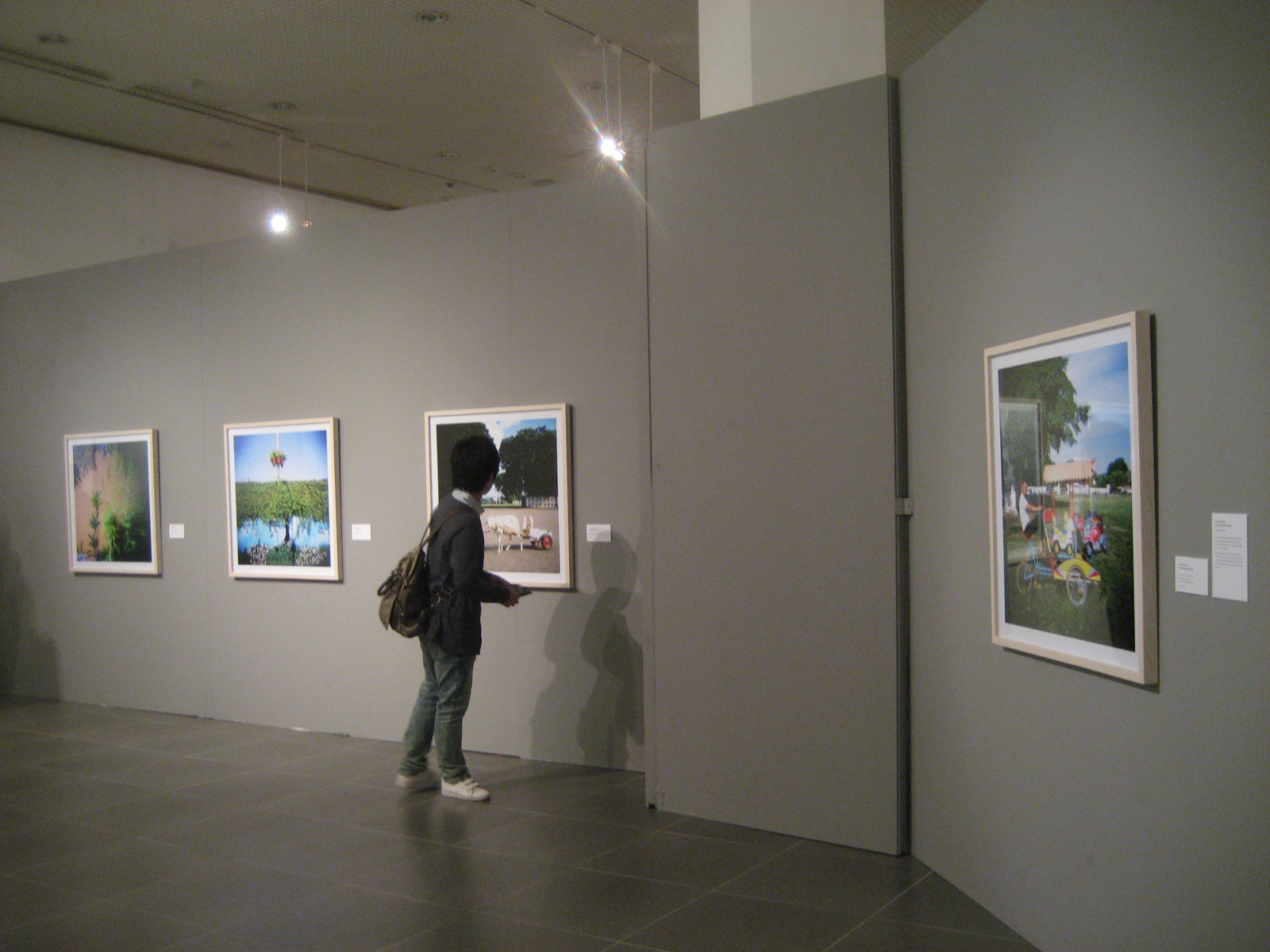
Meanwhile, Agung, since 2008 has started his interesting project called Artificially Natural which described human tendency to create visual image with artificial nature, but using a very realistic approach in order to get as close as its real form. Through this series, he attempts to challenge our perception of reality and to re-analyze conceptions, restrictions or tensions between reality and illusion.
The title of Perfect World mainly represents how visual images from both of these projects talk about illusion of human and nature. The tension between them, especially the one which comes from human whose position is more dominant and active, could be the main discourse amid some ranting about how severe our nature(al) situation is. The idea of presenting (illusion about) a perfect world is a provocation which challenges us to re-view our already established perception about the world around us. Human tendency to overcome and manipulate nature, beyond its forced condition, could also be viewed within an interesting aesthetics framework. Sometimes, even everyday objects, like art itself, is an incidental result of the complex sign systems that we firmly believe.
Alia Swastika
Exhibition Curator


 Amidst the amalgamation process of photography within realm of visual art, especially in context of Indonesia, which its echoes felt in the last five years, one actually could feel its tendency to erect more boundaries related to definition or character of each medium. Of course, the matters of alignment and crossing has become an almost certain thing in such practice of contemporary art, therefore the relation between them becomes more complex and acceptable as it is.


 I'm participating on this exhibition with other photographers from Southeast Asia, Angsana: Southeast Photographers Taking Flight at 2902 Gallery, Singapore. This is a fringe event of ArtStage Singapore 2010.
 The visual art exhibition, On Camera, signifies an important phase in MES 56’s passage as part of a discourse in the contemporary arts in Indonesia. In Yogyakarta, 2002, MES 56 was established during the time when the Indonesian photography has a strong tendency to only be explored in the realm of journalism. Their goal: introduce new approaches in the field of photography by positioning it in the filed of arts and, at the same time, question the role of photography in presenting reality.


 Some works from my Artificially Natural and The Workers series were exhibited at the 3rd Daegu Photo Biennale, South Korea.